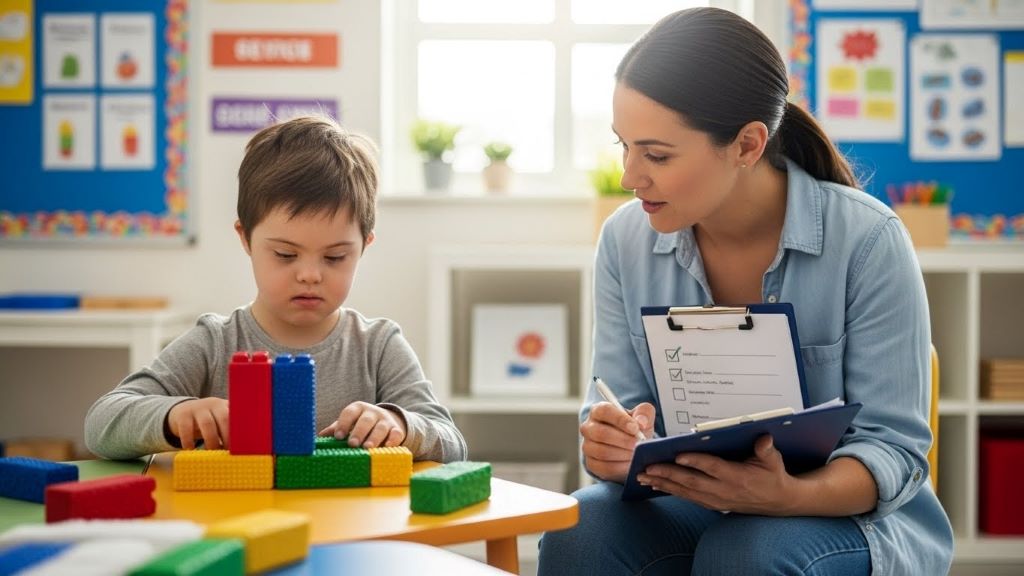

Observing students with special educational needs requires careful attention and structured approaches. Teachers need practical examples to guide their observation practices effectively. This article provides clear examples and strategies for conducting meaningful observations.
Understanding Special Educational Needs Observations
Special educational needs observations help teachers identify student strengths and challenges. These observations inform instructional decisions and support planning. Teachers gather valuable information through systematic watching and recording of student behaviors.
Effective observations focus on specific areas of development. Additionally, they provide evidence for creating individualized education plans. Therefore, teachers must understand what to look for during observation sessions.
Classroom Behavior Observations
Watching how students interact in classroom settings reveals important information. Teachers should note how students respond to instructions and transitions. For example, a student might need extra processing time before following multi-step directions.
Social interactions provide critical insights into student needs. Some students struggle with turn-taking during group activities. Others may have difficulty reading social cues from peers. Recording these patterns helps teachers develop appropriate interventions.
Furthermore, emotional regulation deserves careful attention during observations. Students might show frustration when tasks become challenging. They may need breaks or alternative strategies to manage overwhelming situations.
Academic Performance Observations
Academic observations focus on how students engage with learning materials. Teachers should watch reading behaviors closely. For instance, a student might skip words or lose their place frequently while reading aloud.
Writing tasks offer numerous observation opportunities. Some students struggle with pencil grip or letter formation. Others have difficulty organizing thoughts on paper. These observations guide teachers toward appropriate accommodations.
Mathematical reasoning also requires systematic observation. Students may understand concepts verbally but struggle with written problems. Additionally, some learners need manipulatives to grasp abstract mathematical ideas.
Communication and Language Observations
Language development observations capture how students express themselves and understand others. Teachers should note vocabulary usage and sentence structure. Some students rely heavily on gestures or single words to communicate.
Listening comprehension requires separate observation from speaking skills. A student might follow simple directions easily but struggle with complex instructions. Therefore, teachers should vary the complexity of their requests during observations.
However, communication extends beyond verbal language. Non-verbal communication patterns matter significantly for many students. Eye contact, body language, and facial expressions all provide valuable information about understanding and engagement.
Motor Skills and Physical Development Observations
Fine motor observations examine how students handle classroom tools and materials. Cutting with scissors, manipulating small objects, and writing all require coordination. Teachers should note whether students tire quickly during fine motor tasks.
Gross motor skills affect participation in physical activities and transitions. Some students bump into objects frequently or struggle with balance. Others may have difficulty coordinating movements for activities like catching or skipping.
Sensory processing observations identify how students respond to environmental stimuli. Certain students might cover their ears during loud noises. Additionally, some seek out or avoid particular textures and sensations.
Structured Observation Methods
Time sampling involves observing students at regular intervals throughout the day. Teachers record specific behaviors occurring during predetermined time periods. This method works well for tracking frequency of particular actions or responses.
Event sampling focuses on specific behaviors whenever they occur naturally. For example, teachers might record every instance of a student requesting help. This approach provides detailed information about particular concerns.
Running records offer comprehensive narratives of student activities. Teachers write continuous descriptions of everything a student does during an observation period. These detailed accounts capture context and nuances that other methods might miss.
According to the National Center for Learning Disabilities, systematic observation forms the foundation of effective special education assessment and intervention planning.
Creating Effective Observation Notes
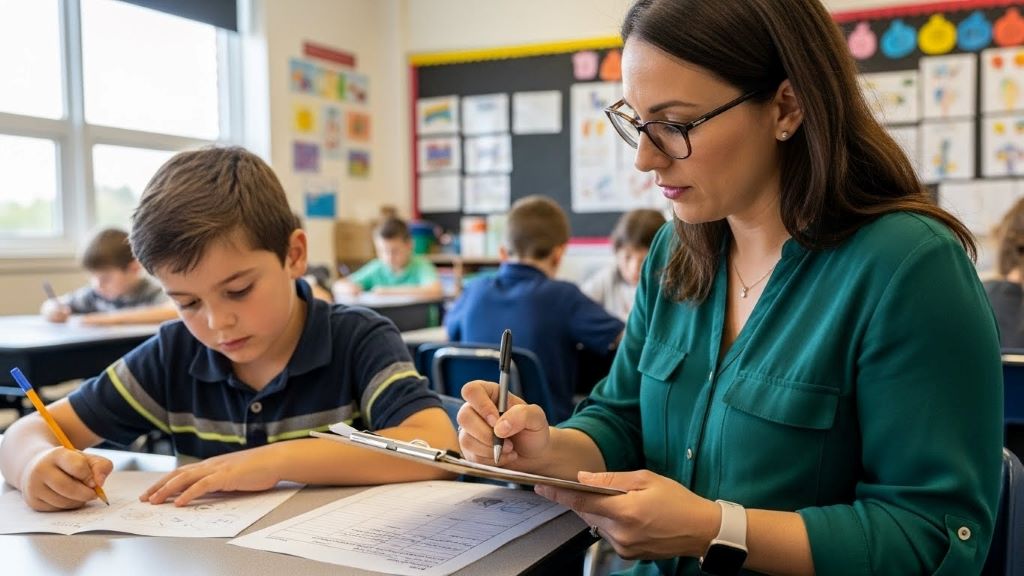
Good observation notes separate facts from interpretations. Teachers should describe what they actually see rather than making assumptions. For instance, writing “student looked away three times during instruction” provides better information than “student seemed disinterested.”
Detailed descriptions include specific examples and context. Recording the time, setting, and circumstances surrounding behaviors adds valuable information. Therefore, notes should mention what happened immediately before and after observed behaviors.
Consistency in note-taking improves the usefulness of observations. Teachers benefit from using templates or structured formats. This approach ensures they capture similar information across multiple observation sessions.
Collaborative Observation Examples
Working with teaching assistants expands observation capabilities. One educator can lead instruction while another focuses entirely on observation. This arrangement allows for more detailed and accurate recording of student behaviors.
Peer observations involve teachers watching each other’s students. Fresh perspectives often reveal patterns that regular classroom teachers might overlook. Additionally, collaborative discussions about observations strengthen everyone’s skills.
Parent input complements classroom observations significantly. Families provide information about behaviors and abilities shown at home. Therefore, teachers should regularly share observations and gather parent perspectives.
Using Observations for Intervention Planning
Observation data guides the selection of appropriate teaching strategies. Patterns across multiple observations reveal consistent needs. For example, repeated difficulty with transitions suggests the need for visual schedules or advance warnings.
Progress monitoring relies on ongoing observations. Teachers compare current observations with baseline data to measure growth. However, they must consider various factors that might influence student performance on particular days.
The U.S. Department of Education emphasizes that observation-based evidence supports equitable access to appropriate educational services for students with disabilities.
Collaboration with specialists improves intervention effectiveness. Speech therapists, occupational therapists, and school psychologists use teacher observations to inform their work. Sharing detailed observation notes ensures everyone works toward common goals.
Technology Tools for Observation
Digital applications streamline the observation and documentation process. Teachers can use tablets or smartphones to record notes quickly. Some apps provide templates specifically designed for educational observations.
Video recording captures interactions that teachers can review later. Watching recordings allows educators to notice details they missed during real-time observation. Additionally, videos can be shared with team members and families.
However, technology should enhance rather than replace thoughtful observation practices. Teachers must still analyze and interpret the information they collect. Digital tools simply make gathering and organizing data more efficient.
Common Observation Challenges
Time constraints make consistent observation difficult for busy teachers. However, brief focused observations often provide sufficient information. Even five-minute observation periods can yield valuable insights when done regularly.
Maintaining objectivity requires conscious effort and practice. Teachers naturally form opinions about students. Therefore, they must work to separate observations from judgments and assumptions.
Knowing what to observe can overwhelm beginning teachers. Starting with one or two specific focus areas makes the process manageable. As skills develop, teachers can expand the scope of their observations.
Conclusion
Effective observation practices form the foundation of quality special education services. Teachers who develop strong observation skills better understand their students’ unique needs. Through systematic watching, recording, and analyzing, educators gather the evidence needed to support every learner.
The examples and strategies outlined in this article provide practical starting points for meaningful observations. Whether focusing on academic skills, behavior patterns, or social interactions, structured observations inform better teaching decisions. Therefore, investing time in developing observation skills ultimately benefits both teachers and students.
Remember that observation is an ongoing process rather than a one-time event. Regular, focused observations combined with collaborative analysis lead to the most effective support for students with special educational needs.
Frequently Asked Questions
How often should teachers conduct formal observations of students with special educational needs?
Teachers should conduct formal observations at least weekly, with brief informal observations happening daily. The frequency depends on the student’s specific needs and current concerns. More frequent observations may be necessary when implementing new interventions or during evaluation periods.
What is the difference between objective and subjective observations?
Objective observations describe exactly what the teacher sees without interpretation, such as “student stood up three times during the lesson.” Subjective observations include judgments or assumptions, like “student was bored during the lesson.” Effective observation notes focus primarily on objective descriptions.
How can teachers observe students while actively teaching?
Teachers can conduct brief observations during independent work time or use teaching assistants to help with observation. Additionally, recording short video clips or taking quick notes immediately after key moments preserves important information. Scheduling dedicated observation periods also ensures consistent data collection.
What should teachers do with observation data after collecting it?
Observation data should be organized, analyzed for patterns, and shared with relevant team members including parents and specialists. Teachers use this information to adjust instruction, plan interventions, and document progress. Regular review of accumulated observations reveals trends that inform educational decisions.
Can observations replace formal assessments for special educational needs?
Observations complement but do not replace formal assessments. While observations provide valuable real-world information about student functioning, standardized assessments offer different types of data. The combination of observation records and formal testing results creates a comprehensive picture of student needs.
Related Topics:
How to Improve Listening Skills for Online Classes: A Comprehensive Guide
Crafting Perfect Personalized Study Plan: A Step-by-Step Guide for Maximizing Learning