
Learning new skills has become essential in today’s fast-changing world. A personal education plan helps you organize your learning journey. However, developing multiple skills at once requires a scalable approach. This means creating a system that grows with you.
Scalability in education planning allows you to expand your learning without feeling overwhelmed. You can start small and gradually add more skills. This approach works for career changers, students, and lifelong learners alike.
Understanding Personal Education Plan Scalability
A scalable personal education plan adapts to your changing needs. It functions like a flexible framework rather than a rigid schedule. Therefore, you can adjust your learning pace and focus areas as you progress.
The concept involves creating systems that accommodate growth. For instance, you might start learning one programming language. Later, you can add web design or data analysis. Your foundational plan supports these additions without requiring a complete restart.
Scalability also means your plan remains manageable. You avoid burnout by distributing your energy across multiple skills efficiently. Additionally, you can prioritize certain skills during specific periods.
Building a Foundation for Multi-Skill Development
Starting with a strong foundation makes scaling easier. First, identify your core learning objectives. Write down the skills you want to develop over the next year.
Next, assess your current skill levels honestly. This assessment helps you determine where to begin. Moreover, it prevents you from attempting too much too soon.
Create a skill inventory that includes both hard and soft skills. Hard skills might include technical abilities like coding or graphic design. Soft skills encompass communication, leadership, and time management. According to research from Harvard Business Review, soft skills increasingly determine career success in modern workplaces.
Consider these foundational elements:
- Clear learning goals for each skill
- Realistic timeframes for skill acquisition
- Available resources and learning materials
- Dedicated practice time each week
- Methods for tracking progress
Designing Your Scalable Learning Framework
Your framework should accommodate multiple skills simultaneously. However, it must prevent cognitive overload. The key lies in strategic organization and time allocation.
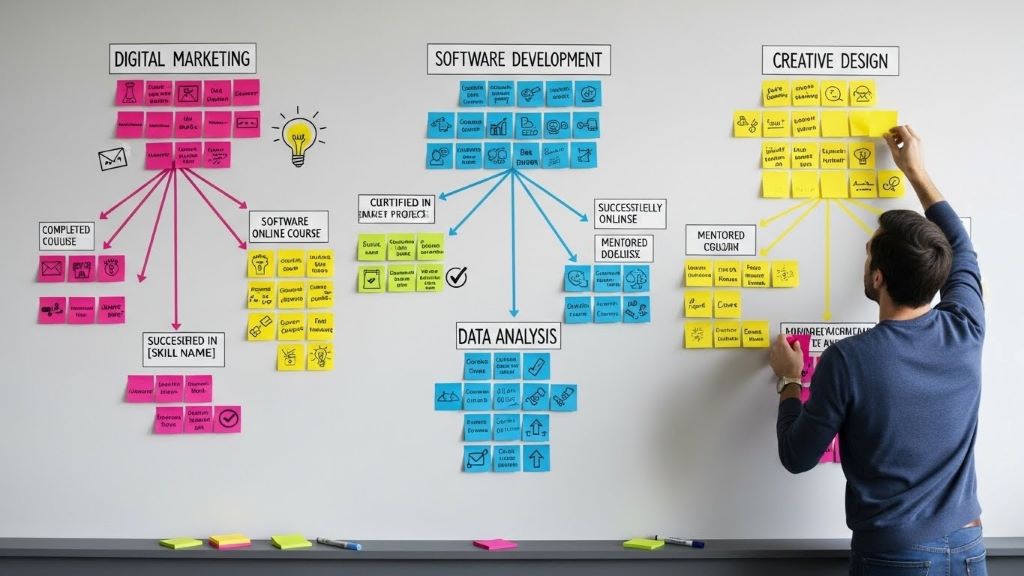
Use a modular approach to structure your plan. Each skill becomes a separate module with its own mini-curriculum. This separation allows you to work on different skills without confusion.
Implement time blocking to manage your learning schedule. Dedicate specific time slots to particular skills. For example, mornings might focus on language learning while evenings cover technical skills.
Create skill clusters that complement each other. Learning web design alongside user experience principles creates synergy. Similarly, studying public speaking with content writing enhances both abilities.
Furthermore, establish milestones for each skill module. These checkpoints help you measure progress across multiple learning tracks. They also provide motivation as you achieve smaller goals.
Prioritization Strategies for Multiple Skills
Not all skills deserve equal attention simultaneously. Therefore, implement a prioritization system that reflects your immediate needs and long-term goals.
Use the urgency-importance matrix to categorize your skills. High-priority skills need immediate attention and regular practice. Medium-priority skills receive consistent but lighter focus. Low-priority skills can wait for dedicated learning sprints.
Consider your career trajectory when prioritizing. Skills directly applicable to your current job deserve more immediate focus. However, don’t neglect skills that prepare you for future opportunities.
Rotate your focus periodically to maintain engagement. Spending three months intensively on one skill before shifting primary focus prevents stagnation. Meanwhile, maintain other skills with lighter practice sessions.
Additionally, recognize when skills overlap. Learning data visualization naturally incorporates elements of design thinking and statistical analysis. These overlaps make multi-skill development more efficient.
Resource Allocation and Time Management
Effective resource management determines your plan’s scalability. Limited time and energy require strategic distribution across multiple learning objectives.
Calculate your available learning hours weekly. Be realistic about commitments outside education. Most people can dedicate between five and fifteen hours weekly to structured learning.
Distribute time based on skill complexity and urgency. Complex skills need longer, uninterrupted sessions. Simpler skills benefit from shorter, more frequent practice periods.
Leverage different learning formats for efficiency. Video courses work well during commutes. Reading fits into lunch breaks. Hands-on practice requires dedicated evening or weekend blocks.
Invest in quality resources that serve multiple purposes. Comprehensive online platforms often cover several related skills. Therefore, a single subscription might support multiple learning tracks.
Technology and Tools for Scalable Learning
Technology enables scalable personal education plans. Digital tools help you organize, track, and optimize your multi-skill development journey.
Learning management platforms centralize your educational resources. Services like Coursera, LinkedIn Learning, and Udemy offer courses across numerous disciplines. You can switch between subjects seamlessly within one platform.
Use project management tools to track learning progress. Applications like Notion, Trello, or Asana help visualize your skill development timeline. They also remind you of upcoming milestones and deadlines.
Note-taking apps consolidate knowledge from various sources. Digital notebooks allow you to create interconnected notes across different subjects. This interconnection reveals relationships between seemingly separate skills.
Spaced repetition software enhances retention for memory-intensive skills. Tools like Anki help you remember vocabulary, formulas, or factual information efficiently. According to research published by the National Institutes of Health, spaced repetition significantly improves long-term retention.
Measuring Progress Across Multiple Skills
Tracking progress keeps you motivated and highlights areas needing adjustment. However, measuring multiple skills requires systematic approaches.
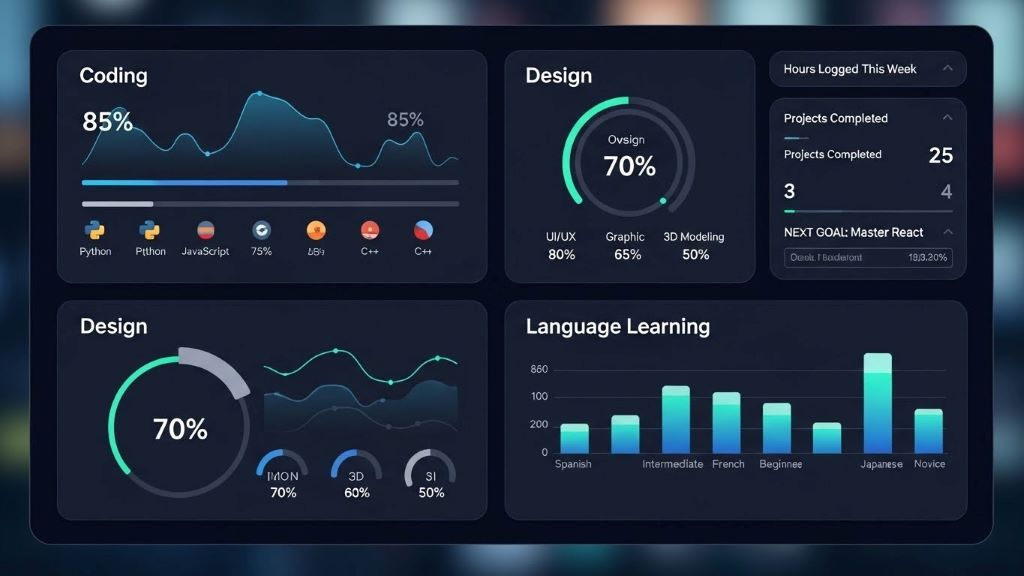
Create a dashboard that displays all your learning metrics. Include completion percentages, practice hours, and skill assessments. Visual representations make progress tangible and encouraging.
Set skill-specific benchmarks that indicate advancement. For programming, this might mean completing projects of increasing complexity. For languages, benchmarks could include conversation milestones or reading comprehension levels.
Schedule regular self-assessments quarterly. These evaluations reveal which skills are progressing well and which need more attention. Moreover, they help you adjust your plan’s scalability.
Seek external validation when possible. Certifications, peer reviews, or practical applications confirm your skill development. They also add credibility to your learning journey.
Overcoming Common Scalability Challenges
Expanding your personal education plan brings predictable challenges. Recognizing these obstacles helps you prepare effective solutions.
Time constraints often limit scalability. Combat this by improving learning efficiency rather than adding more hours. Focus on high-impact activities that accelerate skill acquisition.
Motivation fluctuates when juggling multiple skills. Create accountability systems through learning partners or public commitments. Additionally, celebrate small wins to maintain enthusiasm.
Information overload can paralyze decision-making. Curate your learning resources carefully. Choose quality over quantity when selecting courses or materials.
Skill maintenance becomes harder as you add more competencies. Implement regular review cycles that keep older skills fresh. Even brief refresher sessions prevent significant skill decay.
Adapting Your Plan for Long-Term Success
Successful scalability requires ongoing adaptation. Your personal education plan should evolve with your circumstances and aspirations.
Review your plan monthly to assess its effectiveness. Identify bottlenecks that slow your progress. Then, adjust time allocations or learning methods accordingly.
Remain flexible about skill priorities. Career opportunities or personal interests shift over time. Your plan should accommodate these changes without disrupting overall progress.
Incorporate feedback loops that improve your learning process. Notice which study methods yield the best results. Apply these successful strategies across different skill areas.
Build recovery periods into your schedule. Intensive learning requires rest for consolidation. Therefore, plan lighter weeks that allow mental recovery while maintaining momentum.
Conclusion
Personal education plan scalability transforms multi-skill development from overwhelming to achievable. By creating flexible frameworks, you can pursue multiple learning objectives simultaneously. The key lies in strategic organization, realistic time management, and adaptive planning.
Start with a solid foundation that identifies your skills and resources. Build modular learning systems that grow with your capabilities. Use prioritization to focus energy where it matters most. Leverage technology to streamline your learning process.
Remember that scalability means sustainable growth. You’re building a lifelong learning system, not racing to master everything immediately. Therefore, patience and consistency matter more than speed.
With a scalable approach, you can develop diverse skills that enhance your career and enrich your life. The investment in planning pays dividends through efficient learning and continuous personal growth.
Frequently Asked Questions
How many skills should I try to learn at once?
Most people successfully manage two to four skills simultaneously. Start with one or two skills until you establish consistent learning habits. Then gradually add more as your time management improves. Quality of learning matters more than quantity of skills.
How long does it take to develop a new skill?
Basic competency in most skills requires 20 to 50 hours of focused practice. Intermediate proficiency needs 100 to 300 hours. Expert-level mastery demands thousands of hours over several years. However, timelines vary based on skill complexity and practice quality.
What if I lose motivation while learning multiple skills?
Motivation naturally fluctuates during extended learning journeys. Combat this by varying your learning methods and celebrating small achievements. Consider finding an accountability partner or joining learning communities. Additionally, remind yourself why each skill matters to your goals.
Should I focus on related skills or diverse skills?
Both approaches have merit. Related skills create synergies and deeper expertise in one area. Diverse skills offer broader capabilities and creative cross-pollination. Choose based on your career goals and personal interests. Many successful learners combine both strategies.
How do I know if my personal education plan is scalable?
A scalable plan accommodates new skills without requiring complete restructuring. Test scalability by adding a new skill and observing whether your existing system supports it. If adding skills causes chaos or abandonment of others, your plan needs better organization or reduced scope.
Related Topics:
How to Improve Listening Skills for Online Classes: A Comprehensive Guide
Cracking the Code: Elite Exam Readiness Techniques for Unprecedented Success