
Traditional education plans focus on content coverage and credit accumulation. Skill-based learning prioritizes demonstrable competencies students can apply in real-world situations. Optimizing education plans for this approach requires strategic restructuring of goals, assessments, and learning pathways.
Students equipped with tangible skills rather than just theoretical knowledge thrive in modern careers. However, transitioning from conventional planning to skill-based frameworks demands intentional design. This guide provides actionable strategies for creating effective skill-based student education plans.
Identifying Core Skills for the Education Plan
Effective skill-based plans begin with identifying which competencies matter most. Academic subjects contain numerous potential skills, but not all deserve equal emphasis. Therefore, prioritize transferable skills applicable across multiple contexts and future scenarios.
Critical thinking tops the list of essential skills. Students must analyze information, evaluate sources, and form reasoned conclusions. Additionally, problem-solving abilities enable students to tackle unfamiliar challenges independently.
Communication skills encompass both written and verbal expression. Students need to articulate ideas clearly to diverse audiences. Moreover, active listening and comprehension form crucial components of effective communication.
Collaboration and teamwork prepare students for workplace realities. Most careers require coordinating with others toward common goals. Furthermore, digital literacy has become non-negotiable in virtually every field and daily life.
Self-directed learning skills enable lifelong education. Students must know how to identify knowledge gaps, locate resources, and master new concepts independently. Consequently, metacognitive abilities support continuous growth beyond formal schooling.
Conducting Comprehensive Skills Assessment
Optimization requires understanding current skill levels before planning development. Traditional tests measure content knowledge but often miss practical competencies. Therefore, skills assessments must evaluate application rather than recall.
Performance-based assessments reveal actual abilities. Students demonstrate skills through projects, presentations, and practical tasks. Additionally, these assessments show how students apply knowledge in realistic contexts.
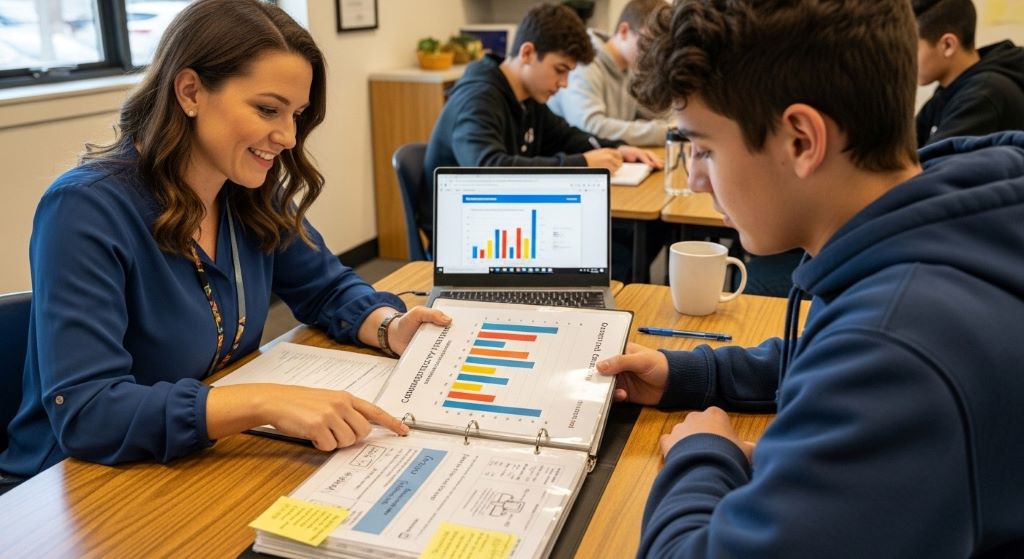
Create rubrics defining proficiency levels for each target skill. Clear criteria help students understand expectations and self-assess progress. Moreover, rubrics ensure consistent evaluation across different assignments and assessors.
Portfolio reviews provide comprehensive skills documentation. Students compile work samples demonstrating various competencies over time. Furthermore, portfolios show growth trajectories rather than isolated snapshots.
Self-assessment builds metacognitive awareness. Students reflect on their own skill development, identifying strengths and improvement areas. However, self-assessments should complement rather than replace external evaluation.
Setting Specific Skill-Based Learning Objectives
Vague goals like “improve writing” lack the specificity needed for effective planning. Skill-based objectives must describe exactly what students will be able to do. Therefore, use action verbs and measurable outcomes when crafting objectives.
Strong objectives follow the SMART framework: Specific, Measurable, Achievable, Relevant, and Time-bound. Instead of “understand statistics,” write “analyze data sets using mean, median, and mode to draw evidence-based conclusions.” Additionally, concrete objectives enable clear progress tracking.
Break complex skills into component sub-skills. Writing encompasses research, organization, grammar, style, and revision. Students master each component before integrating them into sophisticated compositions. Moreover, this breakdown prevents overwhelming students with overly broad targets.
Sequence objectives building from foundational to advanced skills. Simple skills form the basis for complex applications. Furthermore, logical progression ensures students develop necessary prerequisites before tackling challenging competencies.
Align skill objectives with student interests and career aspirations. Personalized goals increase motivation and engagement. However, maintain balance between student preferences and essential competencies all learners need.
Designing Authentic Learning Experiences
Skill development requires practice in meaningful contexts. Worksheets and isolated exercises rarely translate to real-world competency. Therefore, design learning experiences mirroring authentic applications of target skills.
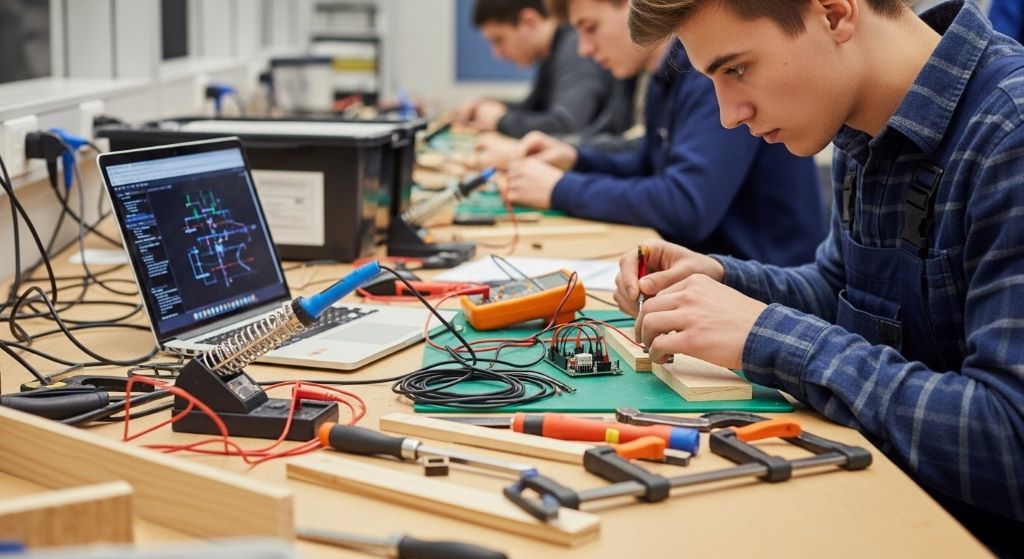
Project-based learning engages students in extended investigations producing tangible outcomes. Students research topics, solve problems, and create products demonstrating multiple skills simultaneously. Additionally, projects often connect to community issues or student interests.
Case studies present realistic scenarios requiring skill application. Students analyze situations, propose solutions, and justify decisions. Moreover, case studies expose learners to professional contexts they’ll encounter in careers.
Simulations and role-playing provide safe practice environments. Students apply skills without real-world consequences while receiving feedback. Furthermore, simulations can recreate complex situations difficult to access otherwise.
Service learning connects academic skills to community needs. Students use competencies to address actual problems while developing civic responsibility. However, ensure genuine service rather than superficial volunteering disconnected from skill objectives.
According to Forbes, skills-based approaches in education better prepare students for rapidly changing job markets by focusing on competencies rather than static content knowledge.
Creating Flexible Learning Pathways
One-size-fits-all instruction conflicts with skill-based education principles. Students possess different baseline abilities and learn at varied paces. Therefore, education plans must accommodate individual differences through flexible pathways.
Offer multiple routes to skill mastery. Some students learn best through reading, others through hands-on practice or discussion. Additionally, varied approaches prevent boredom and engage diverse learning preferences.
Implement adaptive pacing allowing faster advancement when students demonstrate competency. Students shouldn’t wait for classmates before progressing to new challenges. Moreover, struggling learners receive additional time and support without being left behind.
Provide choice in how students demonstrate skills. Assessment menus let students select from options like presentations, written reports, videos, or demonstrations. Furthermore, choice increases motivation and allows students to showcase strengths.
Create intervention protocols for students struggling with specific skills. Alternative instruction methods, peer tutoring, and additional practice support mastery. However, interventions should address specific skill gaps rather than general remediation.
Integrating Cross-Curricular Skill Development
Skills rarely exist in subject-specific silos. Critical thinking applies in mathematics, science, literature, and history. Therefore, education plans should intentionally develop skills across multiple disciplines.
Map which skills each course or unit will emphasize. Ensure comprehensive coverage without overwhelming any single subject. Additionally, coordinated skill development across teachers creates reinforcement and multiple practice opportunities.
Design interdisciplinary projects requiring skills from multiple subjects. Students might research a historical event, analyze statistical data about it, and write persuasive arguments about its significance. Moreover, integrated projects reveal how skills combine in authentic contexts.
Establish common skill frameworks and rubrics across departments. Consistent expectations and evaluation criteria help students transfer learning between courses. Furthermore, shared language about skills facilitates communication among teachers, students, and families.
Connect academic skills to extracurricular activities. Athletics develop teamwork and resilience, while clubs foster leadership and communication. However, make these connections explicit rather than assuming students recognize skill development.
Leveraging Technology for Skill Practice
Digital tools enable personalized skill development at scale. Technology provides practice opportunities, immediate feedback, and progress tracking. Therefore, strategic technology integration enhances skill-based education plans.
Adaptive learning platforms adjust difficulty based on student performance. These systems identify skill gaps and provide targeted practice. Additionally, algorithms optimize practice sequences for efficient mastery.
Video tutorials allow students to learn skills at their own pace. Demonstrations can be paused, replayed, and reviewed as needed. Moreover, video libraries provide alternative explanations when initial instruction doesn’t connect.
Collaboration tools facilitate teamwork and communication skill practice. Students use shared documents, video conferencing, and project management platforms. Furthermore, these tools mirror professional workplace technologies.
Digital portfolios organize skill development evidence across years. Students upload work samples, reflections, and assessments documenting growth. However, ensure students develop curation and self-assessment skills rather than simply collecting everything.
Simulation software provides risk-free skill practice. Students can experiment, fail, and retry without real consequences. Additionally, simulations often provide immediate feedback accelerating learning.
Implementing Ongoing Progress Monitoring
Skill development requires continuous assessment rather than periodic testing. Education plans must include regular check-ins tracking incremental progress. Therefore, establish systematic monitoring procedures.
Weekly or bi-weekly skill check-ins identify emerging issues early. Brief assessments reveal whether students are progressing toward objectives. Additionally, frequent monitoring enables timely interventions before students fall significantly behind.
Data tracking systems visualize skill development over time. Charts and graphs show growth trajectories for each competency. Moreover, visual representations help students recognize progress even when mastery seems distant.
Student-led conferences increase ownership of skill development. Students present evidence of their growth and discuss goals with teachers and families. Furthermore, this process builds communication and self-assessment skills.
According to The Washington Post, employers increasingly value demonstrable skills over credentials, making skill-based education planning more relevant than ever for student success.
Adjust education plans based on monitoring data. If students master skills faster than anticipated, increase challenge levels. However, if progress stalls, modify approaches or provide additional support.
Providing Targeted Feedback for Skill Growth
Generic praise like “good job” doesn’t advance skill development. Effective feedback identifies specific strengths and concrete improvement steps. Therefore, education plans must include structures for meaningful feedback.
Feedback should reference skill rubrics and learning objectives. Students need to understand which aspects of their performance met standards and which need work. Additionally, specific feedback guides focused practice.
Timely feedback enables immediate adjustment. Waiting weeks for assessment results diminishes learning impact. Moreover, prompt feedback prevents students from reinforcing incorrect techniques.
Balance corrective feedback with recognition of progress. Students need to know what they’re doing well alongside improvement areas. Furthermore, acknowledging growth maintains motivation during challenging skill development.
Teach students to provide peer feedback using rubrics and frameworks. Peer assessment develops evaluative skills while providing additional feedback sources. However, ensure peer feedback remains constructive and respectful.
Encourage student questions about feedback. Dialogue clarifies expectations and helps students understand how to improve. Additionally, these conversations build metacognitive awareness about learning processes.
Engaging Families in Skill Development
Parents and guardians support skill development beyond school hours. However, families need understanding of skill-based approaches to help effectively. Therefore, education plans should include family engagement strategies.
Communicate skill objectives clearly to families. Explain what each skill means and why it matters for student success. Additionally, provide examples of what proficiency looks like.
Share progress updates focusing on skill development rather than just grades. Narrative reports describe specific competencies mastered and areas of focus. Moreover, skill-based reporting gives families actionable information.
Suggest home activities supporting skill practice. Families can reinforce skills through everyday activities like cooking, budgeting, and problem-solving. Furthermore, home practice extends learning time and shows real-world applications.
Host workshops teaching families about skill-based education. Interactive sessions help parents understand the approach and how to support their children. However, provide multiple participation options accommodating different schedules.
Create two-way communication channels for questions and concerns. Families may worry about non-traditional approaches or need clarification. Additionally, family input provides valuable perspectives on student learning.
Reviewing and Revising the Education Plan
Optimization is ongoing rather than one-time. Education plans require regular review and adjustment based on student progress and changing needs. Therefore, build revision cycles into the planning process.
Quarterly reviews assess whether skill objectives remain appropriate. Students may master skills faster or slower than anticipated. Additionally, student interests and goals may evolve requiring plan modifications.
Analyze which learning experiences most effectively develop skills. Some activities may engage students while others fall flat. Moreover, effectiveness varies among different students requiring differentiated approaches.
Solicit student input during revisions. Students offer valuable perspectives on what helps their learning. Furthermore, involving students in planning builds ownership and self-direction skills.
Consider how external factors affect skill development. Family situations, health issues, or other circumstances may necessitate timeline adjustments. However, maintain high expectations while showing flexibility.
Document successful strategies and challenges for future planning. Reflective practice improves subsequent education plans. Additionally, sharing insights with colleagues benefits other students and teachers.
Conclusion
Optimizing student education plans for skill-based learning transforms education from content delivery to competency development. Success requires identifying core skills, conducting thorough assessments, setting specific objectives, and designing authentic experiences. Additionally, flexible pathways, cross-curricular integration, technology leverage, and ongoing monitoring prove essential. Therefore, educators must commit to continuous improvement through regular review and revision. Families play crucial supporting roles when properly engaged and informed. Consequently, well-optimized skill-based plans prepare students for success in rapidly changing professional and personal landscapes where demonstrable competencies matter more than accumulated credits.
Frequently Asked Questions
What is the main difference between traditional and skill-based education plans?
Traditional plans focus on content coverage and credit accumulation through time-based progression. Skill-based plans prioritize demonstrable competencies students can apply in real situations. Therefore, skill-based approaches emphasize what students can do rather than what they’ve been exposed to.
How do you measure progress in a skill-based education plan?
Progress measurement uses performance-based assessments, portfolios, and skill rubrics showing proficiency levels. Students demonstrate abilities through authentic tasks rather than traditional tests. Additionally, ongoing monitoring tracks incremental growth toward mastery rather than periodic grade snapshots.
Can skill-based education plans work for college preparation?
Yes, skill-based plans effectively prepare students for college by developing critical thinking, communication, research, and self-directed learning. Colleges increasingly value these competencies alongside traditional academics. Moreover, skill-based portfolios often strengthen college applications by demonstrating real capabilities.
How often should a skill-based education plan be revised?
Education plans should be reviewed quarterly with minor adjustments made as needed throughout the school year. Major revisions typically occur annually based on comprehensive progress analysis. However, significant changes in student circumstances may require immediate plan modifications.
What role do standardized tests play in skill-based education planning?
Standardized tests can inform baseline skill assessments and verify certain competencies. However, they shouldn’t drive the entire plan since they measure limited skill sets. Therefore, use standardized data as one input among multiple assessment sources when optimizing skill-based education plans.
Related Topics:
Cracking the Code: Elite Exam Readiness Techniques for Unprecedented Success
The Ultimate Guide to the Best Study Techniques for College Students